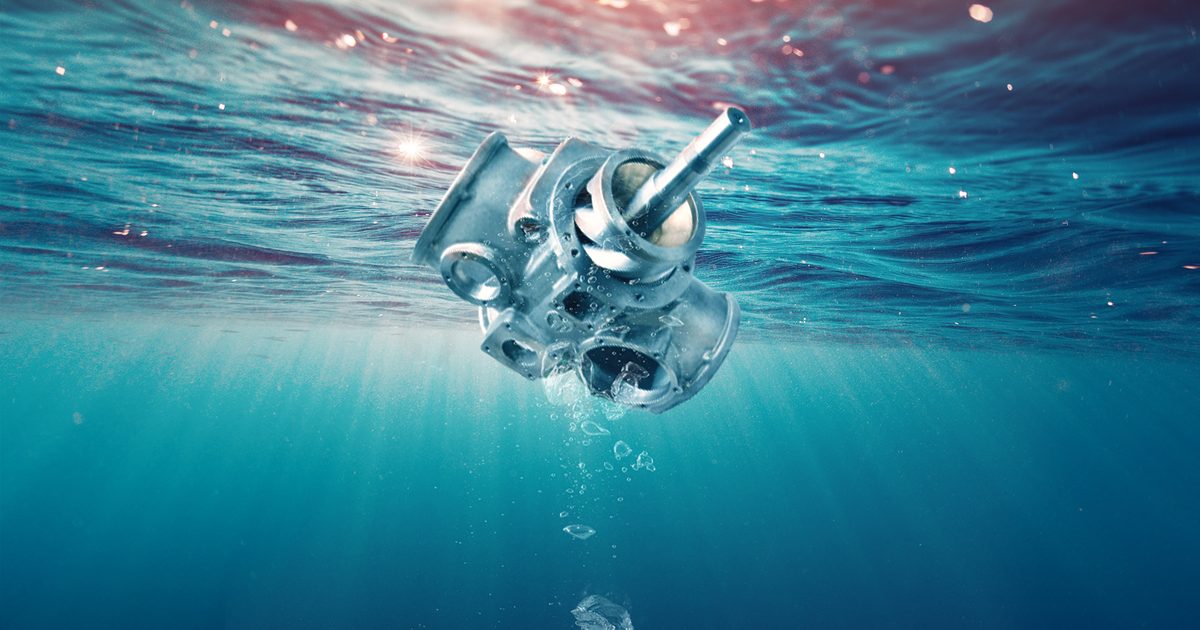
Is the pressure of the air source of the factory the same for each channel?
Factory air supply: is the pressure the same in each channel?
First answer: not the same.
Just like your tap water, the water pressure from the water plant is a number, but when you turn on the kitchen faucet and the shower in the farthest toilet, the water flow is definitely different.
The same is true for the compressed air in the factory-the pressure is uniform when it comes out of the air compressor, but the pressure will become more and more different when it is sent to various gas points along the pipeline.
Why would it be different?
1. The pipeline has "friction"
the air runs in the pipe, not sliding in the past, and the inner wall of the pipe will "drag its feet". The longer and thinner the pipe, and the more elbows, the greater the drag and the more pressure will drop.
For example, you drink milk tea with a long straw, and it is very difficult to suck the last few mouthfuls-not the milk tea is gone, but the straw is too long and the resistance eats up the strength.
2. Different distance from the air compressor
in the workshop near the air compressor, the air is "just out of the oven" and the pressure is sufficient. In the workshop far away, the air has run a long way, and the place is already "panting", so the pressure will naturally be low.
3. If everyone uses gas at the same time, they will "rob"
the factory does not have only one equipment using gas, but may have dozens of equipment blowing, beating and pushing at the same time. Everyone grab together, the air in the pipeline is like the road during the rush hour. When it is congested, the pressure will drop.
As soon as you open the pneumatic wrench, the spray gun next door may feel "less energetic", which is why.
4. Some devices are born with different pressures
not all devices need the same amount of energy. For example:
- the spray gun for blowing dust needs less strength.
- The cylinder that clamps the workpiece requires more effort.
- Precision spraying equipment, the stability of the pressure requirements are particularly high
so when the factory was designed, deliberately divide the pipeline into several "branches", each of which gives a different pressure, Just like the hot and cold water pipes at home go separately.
How does the factory solve this problem?
Method 1: The main pipeline is thick, the branch pipeline is thin, and the distribution is step by step.
From the air compressor, first take a very thick main pipe, like a highway. When you arrive at each workshop, you will be divided into small branch pipes, such as provincial roads and village roads. The main pipe is thick and has low resistance, which can ensure large flow. Although the branch pipe is thin, the pressure is enough because the gas consumption is small.
Method 2: Add a gas storage tank as a "buffer pool"
put a large tank in the middle of the pipeline or near the gas point, which is equivalent to an "air reservoir". When the gas is used less, the jar is full, and when the gas is used more, the jar is replenished to smooth the pressure fluctuation.
Just like the water tank on the roof of your house, it is full when no one uses water in the middle of the night, and when everyone washes together in the morning, the water pressure will not change suddenly.
Method 3: Use the pressure reducing valve to "cut a knife"
in some places, the pressure required is lower than that of the main pipeline, so a pressure reducing valve is installed to steadily reduce the pressure to the required value. Just like the valve on the faucet, if you twist it, the water flow will be small and soft.
Method 4: set up an air compressor near the gas consumption point
if the factory is very large and it is useless to pull the pipeline too thick, then simply put another air compressor in the distance to supply air nearby, thus saving the loss of long-distance transportation.
What role does the water lubricated air compressor play in this system?
No matter what kind of piping design, the quality and stability of the gas source is the basis of everything. If the gas from the air compressor itself fluctuates from high to low, from oil to water, no matter how well the back pipeline is designed, it will be useless.
Water-lubricated air compressors have several natural benefits in this regard:
smoother out of gas: The water-lubricated rotor has uniform resistance when running, unlike an oil-lubricated machine, the oil becomes sticky and the resistance fluctuates. Therefore, the output pressure fluctuation of the water lubricated air compressor is very small, and the "bottom gas" in the main pipeline is more sufficient.
Don't worry about oil contaminating the pipeline: The traditional oil-lubricated air compressor runs for a long time, and the oil vapor will run along the pipeline to the distance, and a layer of sludge will form on the pipe wall. The pipeline becomes narrower and narrower, the resistance becomes larger and larger, and the pressure in the distance becomes more and more. low. Water lubricated air compressor does not have this problem, the inner wall of the pipeline is clean, and the resistance is almost the same for many years.
Less maintenance, less downtime: The water-lubricated air compressor does not need to change the oil or treat the oil circuit, so the probability of failure is low and the number of downtime for maintenance is small. For the factory, when the air compressor stops, the whole gas path is cut off and all workshops have to wait. The water-lubricated machine is more "leather", the air source is continuous, and the pressure of each channel is naturally more stable.
Cleaner with oil-free technology some factories have extremely high requirements for air quality, such as semiconductors, food and medicine. At this time, oil-free water-lubricated air compressors will be selected. It does not allow oil to enter the gas path from the source. The subsequent gas storage tanks, dryers, and filters are all light in burden. The entire gas path is clean from beginning to end and has stable pressure.
Simply put: the water lubricated air compressor is like a "good temper, no chaos" air source, its output is stable, does not pollute the pipeline, does not strike easily, and makes the whole pipeline system behind work better.
Take an example of life.
Think of the gas path of the factory as a big tree:
- root it's the air compressor. The pressure comes out from here.
- Trunk it is the main pipeline, thick and stable
- branch it is a branch pipe of each workshop, thick and thin.
- leaves is every piece of gas equipment
if the root comes out of the water, the whole tree will sway. If the roots come out of the water with sediment, the branches and leaves will be blocked sooner or later.
Choting a good water-lubricated air compressor is equivalent to choosing a good root with stable water outlet and clean water quality for this tree.
One sentence summary
the air supply pressure of each channel in the factory is different, which is normal and designed. The distance of the pipeline, the amount of gas used, and the demand for equipment are different, and the pressure is naturally different. However, no matter how it is divided, the air compressor at the source must be reliable-the water-lubricated air compressor is especially suitable to be the "reliable source" because it has stable air output, does not pollute the pipeline and has few faults, so that the whole big tree of the gas path will flourish.